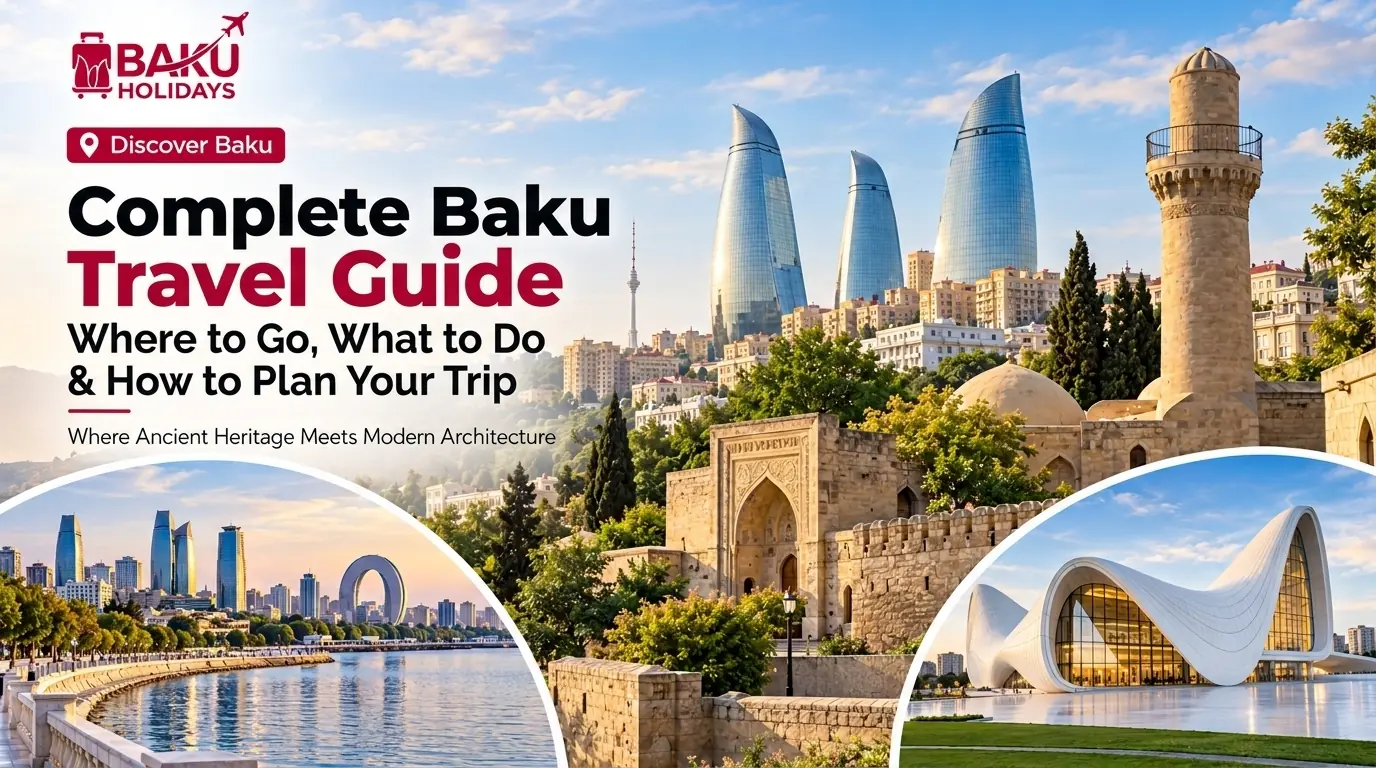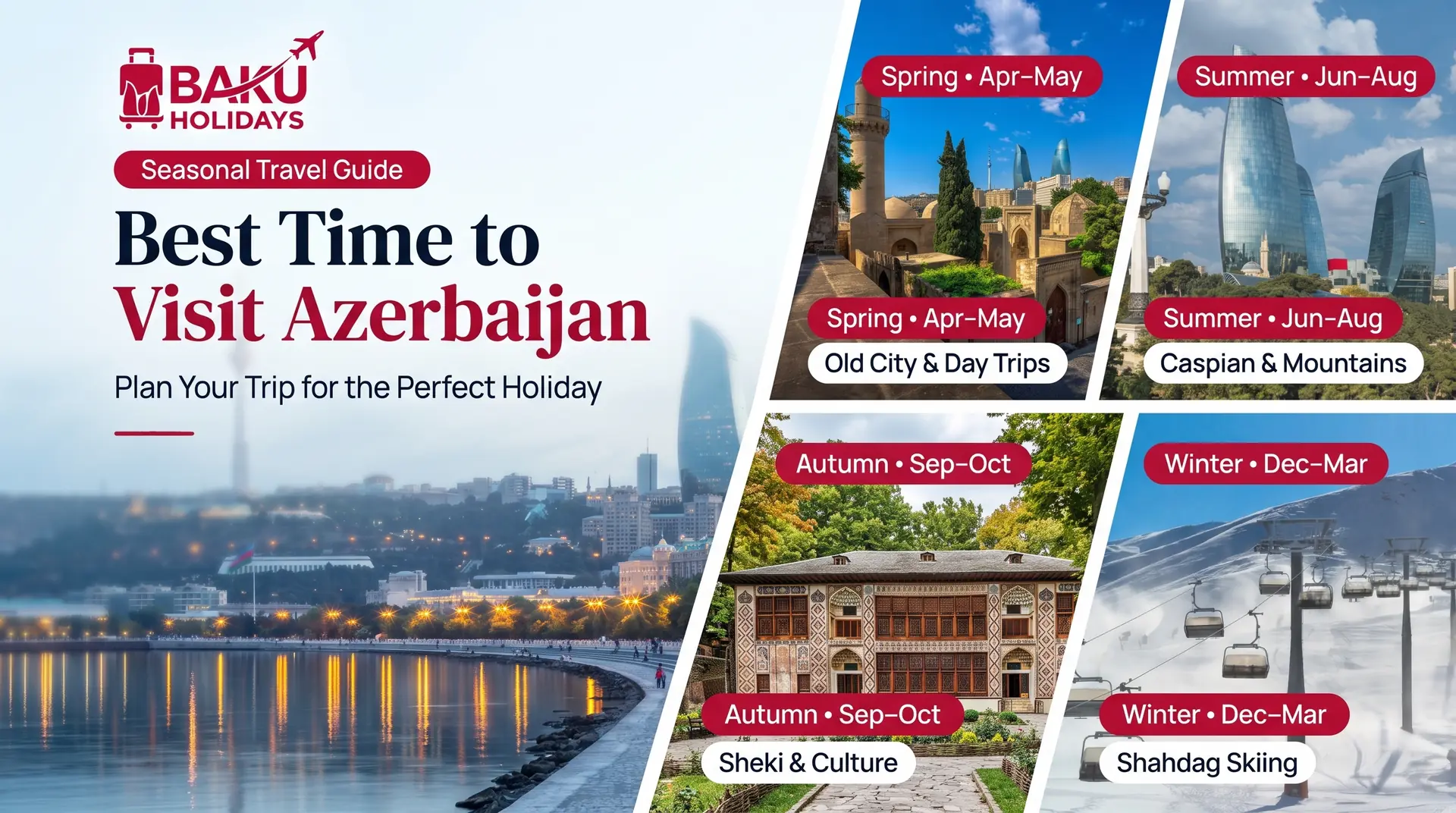
The best time to visit Azerbaijan is from April to June and from September to October. These spring and autumn months bring mild temperatures in Baku, low rainfall, green mountain valleys and comfortable conditions for both city sightseeing and day trips.
That said, there is no single "right" month for everyone. Summer suits travellers who want long, dry days on the Caspian coast and cooler air in the Caucasus foothills. Winter is the only season for skiing at Shahdag. The right choice depends on where you want to go and what kind of Azerbaijan holiday you have in mind.
This guide explains Azerbaijan weather by season, gives a month-by-month breakdown, and matches the best travel months to different trip styles, from family holidays to mountain escapes. You will also find practical planning tips, plus ways to explore Baku and Azerbaijan tours once you have chosen your dates.
When should you visit Azerbaijan?
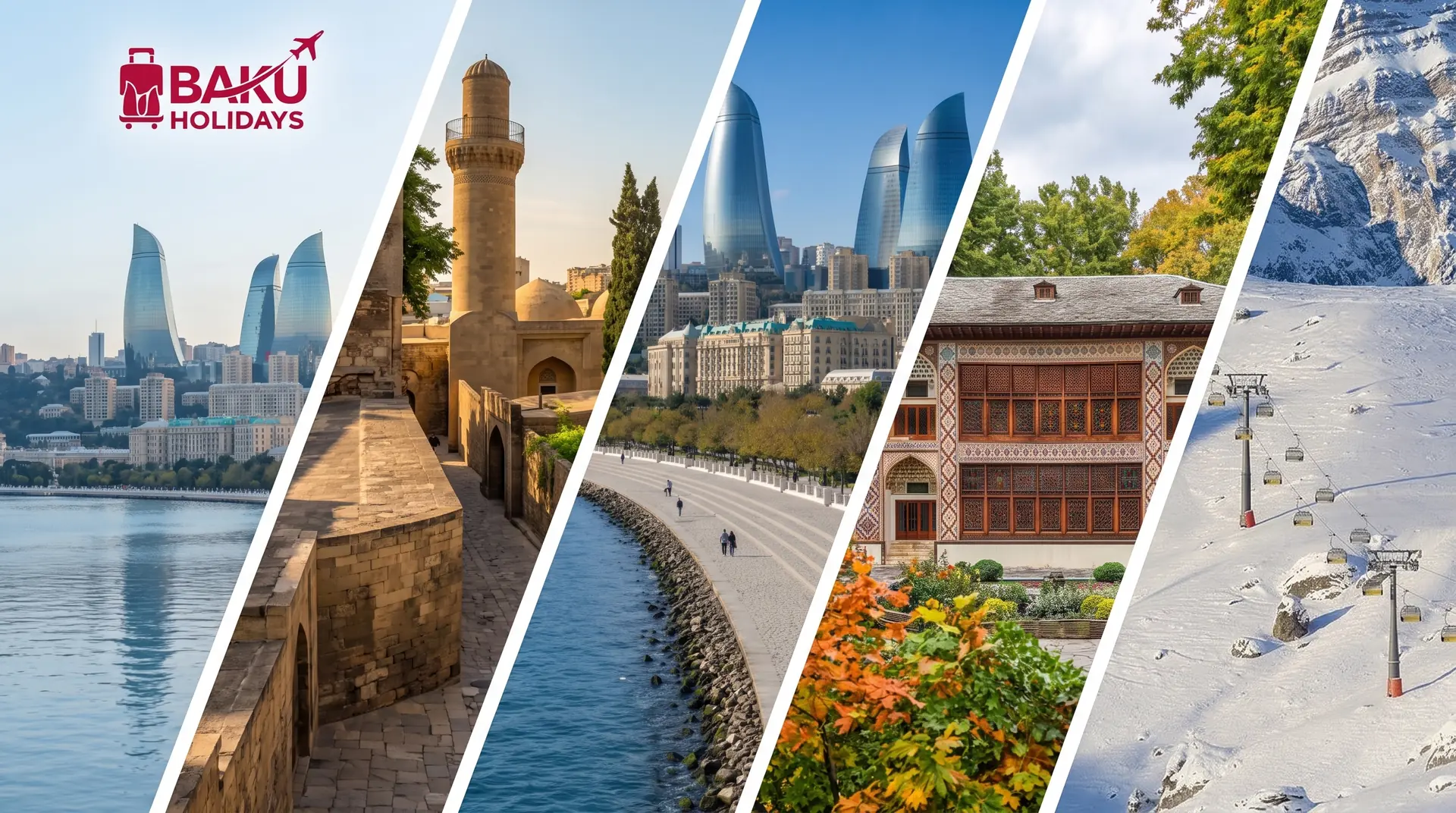
For most travellers, the best overall time to visit Azerbaijan is April to June and September to October, when mild weather suits both Baku and the regions. June to August is the best period for the Caspian coast and the mountains, with warm, dry days in Baku and cooler air in Gabala and Shahdag.
If you want snow, plan your Azerbaijan holiday between December and March, when Shahdag Mountain Resort operates its ski season. For culture, March is a rewarding month because Azerbaijan celebrates Novruz, the spring New Year festival. November to February are the quietest months in Baku, with cooler, windier weather and fewer visitors.
What is the weather like in Azerbaijan?
Azerbaijan has hot, dry summers and cool winters in Baku, with noticeably cooler and wetter conditions in the mountains. Because the country runs from the Caspian coast to the Greater Caucasus, the weather in Baku can be very different from the weather in Gabala, Quba or Shahdag on the same day.
Baku itself is a dry city. Average highs reach about 29°C in July and August, while January and February average highs of around 6–7°C (Advantour climate data). July is the driest month, and rainfall rises through October and November. Baku is also known for strong winds, and November tends to be the windiest month (Weather Spark).
The regions add variety to any Azerbaijan holiday.
Gabala, Sheki, Quba and Qusar sit in the foothills of the Greater Caucasus. They are greener and cooler than Baku in summer, which makes them popular escapes from the city heat. Further into the mountains, Shahdag in the Qusar region is Azerbaijan's main ski area, where winter brings snow and freezing temperatures at altitude.
In the south, Lankaran lies near the Caspian and is greener and more humid than Baku. Closer to the capital, Gobustan and the Absheron Peninsula share Baku's dry climate, so midday heat matters most here during the summer months.
Azerbaijan travel seasons at a glance
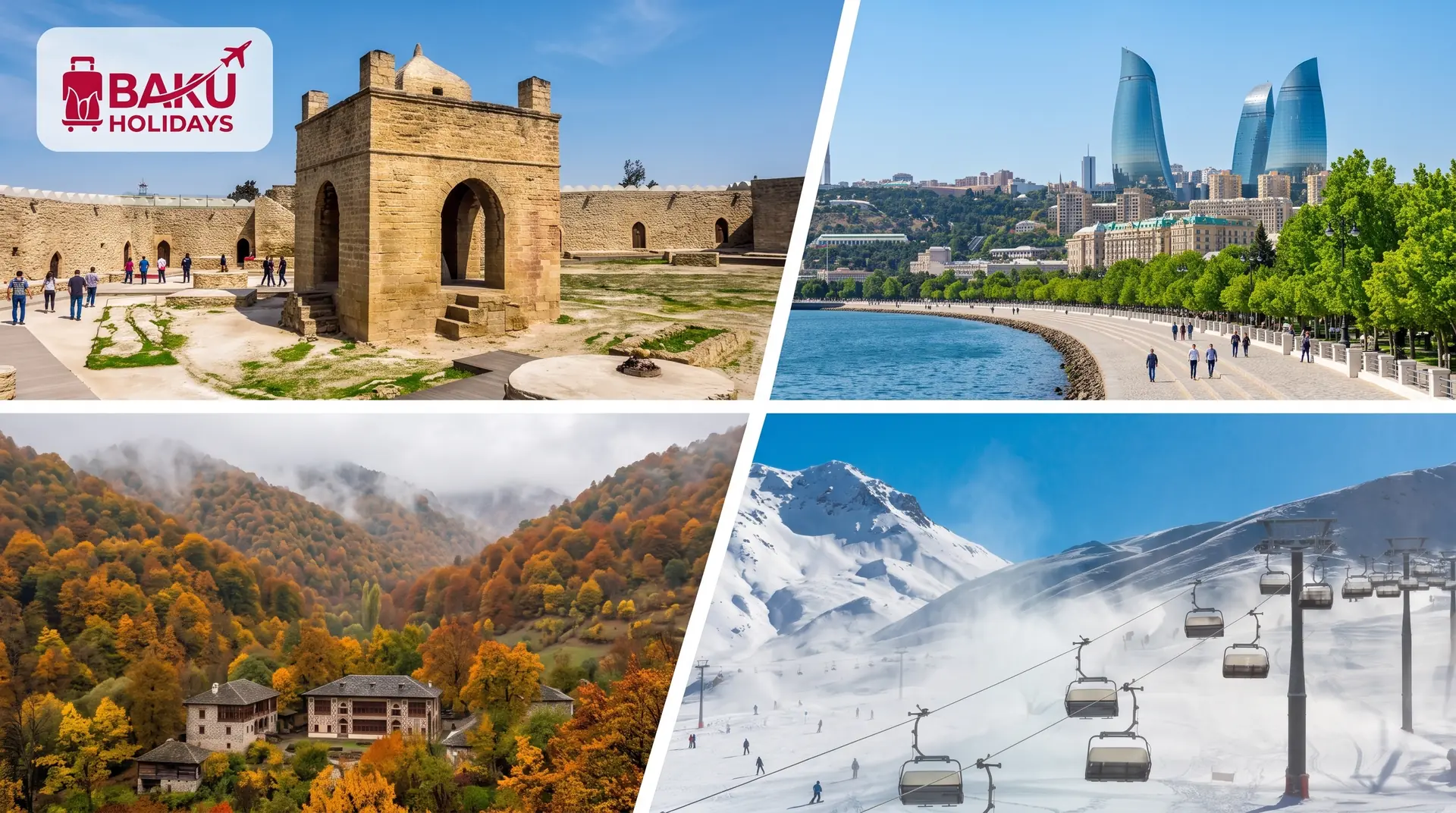
Spring (March to May): the best season for most travellers
Spring is one of the best times to visit Azerbaijan. Baku's average highs rise from about 9°C in March to 22°C in May, and the mountains and valleys turn green. April and May are ideal for walking through Icherisheher, the Old City, and for outdoor day trips to Gobustan and Absheron.
March is cooler but brings Novruz, Azerbaijan's spring New Year celebration. If culture matters more to you than warm weather, March is a strong choice.
Summer (June to August): best for the Caspian and the mountains
Summer is Azerbaijan's warmest and driest season. Baku's average highs sit around 27–29°C, with very little rain. Evenings along Baku Boulevard and the Caspian waterfront are lively, and the mountain regions offer cooler air and green scenery.
Midday sightseeing in Baku, Gobustan and Absheron can feel hot, so plan outdoor visits for the morning or late afternoon. This season is also the busiest for regional travel, so book accommodation and drivers early.
Autumn (September to November): mild weather and harvest colours
September and October rival spring as the best months to visit Azerbaijan. Baku's average highs fall from about 26°C in September to 19°C in October, and the summer crowds thin out. Autumn colours in Gabala and Sheki make this a strong season for photography and scenic drives.
November is cooler, wetter and windier. It suits travellers who prefer quieter attractions and do not mind a jacket.
Winter (December to February): skiing and quiet city breaks
Winter is the low season in Baku, with average highs of about 6–9°C, cloudier skies and cold winds. It is a good time for museums, Old City walks and indoor cultural experiences without crowds.
For snow, head to Shahdag Mountain Resort. The ski season typically runs from December to March, though exact opening and closing dates depend on snowfall each year.
What is the best month to visit Azerbaijan?
May and September are the best months to visit Azerbaijan for most travellers. Both offer warm but comfortable days in Baku, low rainfall and good conditions for combining the capital with Gobustan, Absheron and the mountain regions. April, June and October are close behind.
| Month | Avg high / low (°C) | Rain (mm) | Season | Best for |
|---|---|---|---|---|
| January | 7 / 2 | 23 | Low | Skiing at Shahdag, museums, quiet city breaks |
| February | 6 / 1 | 23 | Low | Skiing, indoor culture, lower hotel demand |
| March | 9 / 3 | 25 | Shoulder | Novruz festival, late-season skiing |
| April | 17 / 8 | 18 | Shoulder | Old City walks, Gobustan, spring greenery |
| May | 22 / 13 | 15 | High | All-round sightseeing, regional road trips |
| June | 27 / 18 | 5 | High | Baku plus Gabala, Sheki and Shahdag |
| July | 29 / 22 | 3 | Peak | Caspian waterfront, mountain escapes |
| August | 29 / 21 | 8 | Peak | Family holidays, mountains, evening strolls |
| September | 26 / 18 | 18 | High | Sightseeing, day trips, comfortable heat |
| October | 19 / 12 | 28 | Shoulder | Autumn colours, Sheki, photography |
| November | 13 / 8 | 36 | Low | Quiet city breaks, museums |
| December | 9 / 3 | 28 | Low | Early ski season, winter city lights |
Temperatures and rainfall are long-term averages for Baku from Advantour. Mountain areas are cooler, and actual weather varies year to year.
January and February
These are Baku's coldest months. Sightseeing is still possible, but expect cold winds and short days. Most leisure travellers come for skiing at Shahdag or for a quiet, museum-focused city break that includes the Azerbaijan National Carpet Museum and the Heydar Aliyev Centre.
March
March is cool in Baku but culturally rich. Novruz, the spring New Year, is celebrated around the March equinox with traditional sweets, bonfires and public festivities. Skiing usually continues at Shahdag through the month.
April and May
These months are ideal for first-time visitors. Mild temperatures suit long walks around Icherisheher, the Maiden Tower and the Palace of the Shirvanshahs. May is especially good for day trips to Gobustan's rock art and mud volcanoes, before summer heat arrives.
June, July and August
Summer brings the warmest, driest Azerbaijan weather. Baku Boulevard, the Flame Towers viewpoint at Highland Park and evening boat trips on the Caspian are at their best. The mountain regions of Gabala, Quba, Qusar and Shahdag offer cooler air, forests and waterfalls, which makes them popular with families.
September and October
Early autumn is one of the best times to visit Azerbaijan. September still feels like summer but without the peak heat. October brings golden landscapes in Gabala and Sheki, and comfortable weather for walking tours. The Azerbaijan Grand Prix has been held on the Baku City Circuit in September in recent years, including 24–26 September in 2026, so check race dates if you plan to travel then (2026 race schedule).
November and December
Late autumn and early winter are quieter, cooler and windier. November is Baku's wettest month on average. December brings festive lighting to central Baku and, depending on snow, the start of the ski season at Shahdag.
When to visit Azerbaijan based on your travel style
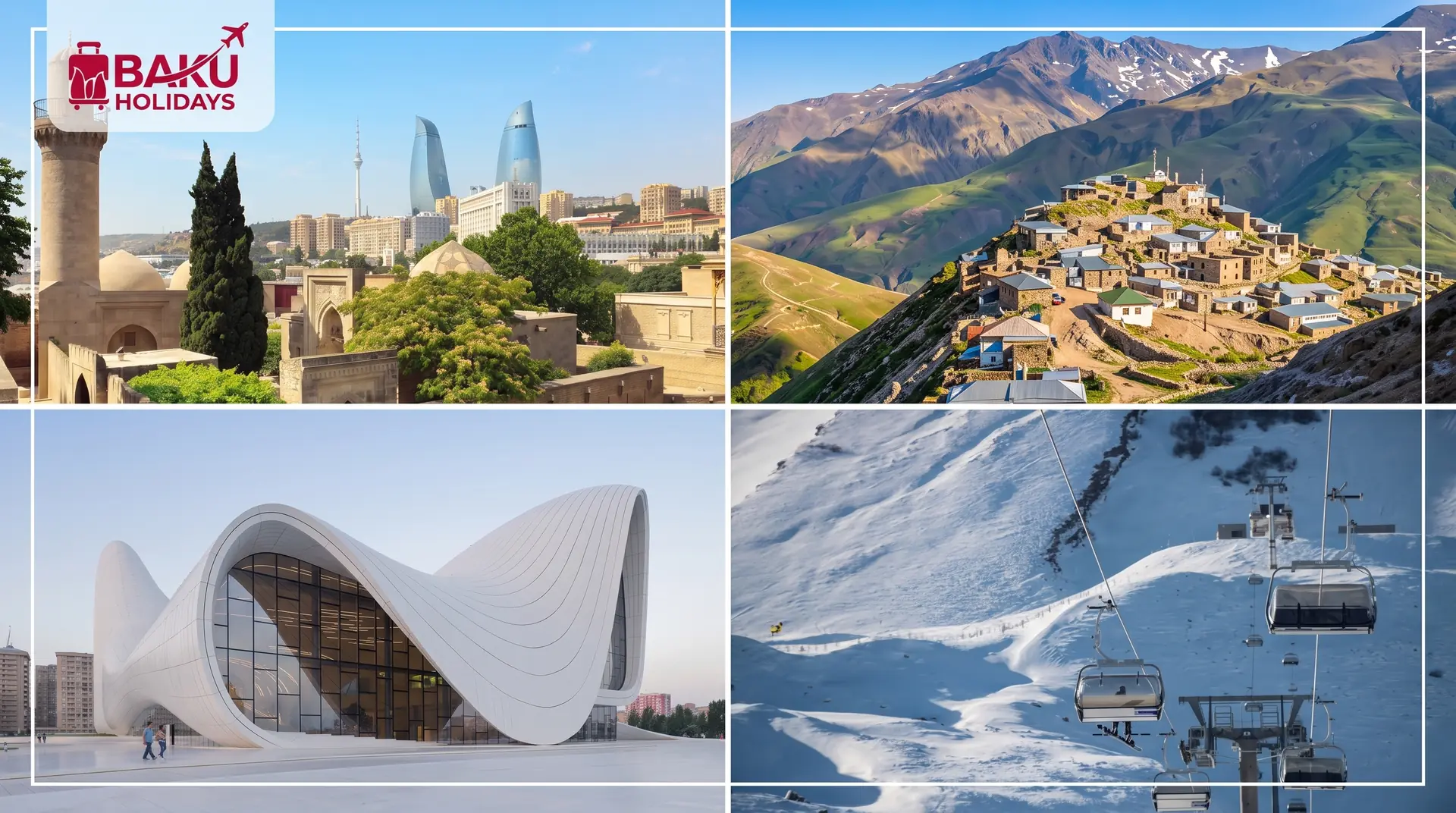
The best time to visit Azerbaijan depends on what you want from the trip. Use this as a quick guide: spring and autumn for sightseeing, summer for mountains and the Caspian, and winter for skiing.
First-time visitors who mainly want sightseeing should aim for April to May or September to October, when walking weather in Baku and on day trips is most comfortable. Families often choose June to August, as school holidays line up with dry weather and the cooler mountain resorts. Nature lovers will find June to September best for green valleys and open roads to Gabala, Quba and Shahdag.
For skiing and snow, December to March is the season at Shahdag, depending on snowfall. Travellers interested in culture and festivals should consider March for the Novruz celebrations, while those seeking a quieter, lower-demand trip will find November to February the calmest time in Baku outside the ski areas.
Best time for Baku sightseeing
April, May, September and October are the best months for exploring Baku. Mild weather makes it easy to walk from Icherisheher to Fountain Square, Nizami Street and Baku Boulevard in a single day. Spring and autumn are also comfortable for a Baku Old City walking tour or a modern city tour of the Heydar Aliyev Centre and Taza Pir Mosque.
Best time for day trips from Baku
Gobustan, the mud volcanoes, Ateshgah Fire Temple and Yanar Dag are best visited in spring and autumn. These sites are exposed and dry, so summer midday heat can be tiring. Yanar Dag, the burning hillside on the Absheron Peninsula, is especially atmospheric after sunset in any season. You can explore the Gobustan rock art and mud volcanoes experience or discover Absheron's Ateshgah and Yanar Dag.
Best time for Gabala, Sheki and the mountains
Late spring through early autumn is the best time for Azerbaijan's mountain regions. Gabala's forests, lakes and waterfalls are at their greenest from May to September, while Sheki's Silk Road heritage is pleasant to explore in spring and autumn. A Gabala mountain and nature tour works well as a day trip or as part of a longer itinerary.
Best time for skiing at Shahdag
December to March is the ski season at Shahdag Mountain Resort in the Greater Caucasus, depending on snowfall. Shahdag is also worth visiting in summer for cooler mountain air and scenery. See the Shahdag mountain experience for both seasons.
Best time to visit Azerbaijan from Saudi Arabia, Kuwait, the UAE and the UK
Travellers from Saudi Arabia, Kuwait and the UAE
Summer is a popular time for GCC travellers, because Baku and the Caucasus foothills are far cooler than the Gulf in June, July and August. Spring and autumn also work well for families who want comfortable sightseeing weather. Book accommodation, drivers and guides early for summer and holiday periods, when demand is highest.
Many GCC families prefer private itineraries. Baku Holidays offers tours in Arabic as well as English, Russian and Turkish, and you can book a local Baku tour guide whose profile lists the languages they speak.
Entry rules depend on your passport. Under the official ASAN Visa guidance, Saudi Arabian and Kuwaiti citizens may make up to three visa-free visits between 15 February 2026 and 15 February 2027, with each stay limited to 30 days; a fourth visit requires a valid visa. UAE citizens can visit visa-free for up to 90 days. These arrangements concern citizenship, not simply residence in a Gulf country. Visa rules can change, so confirm current requirements with official sources before travel.
Travellers from the UK
For UK visitors, May, June and September usually offer the best balance of warm, dry weather without peak summer heat. UK passport holders generally apply for an electronic visa through Azerbaijan's official ASAN Visa system before travel. Check the latest rules on the official e-visa portal before booking.
English-language tours, guides and drivers are widely available, and Baku Holidays' drivers are English-speaking.
Practical tips for planning your Azerbaijan holiday by season
How many days do you need in Azerbaijan?
Most first-time visitors should plan five to seven days in Azerbaijan. That allows two or three days in Baku, a day trip to Gobustan and Absheron, and one or two days in Gabala, Sheki or Shahdag. A shorter three-day trip can still cover Baku and one day trip comfortably.
Season affects how you pace each day. In summer, start sightseeing early and save midday for indoor sites such as the Azerbaijan National Carpet Museum. In winter, daylight is shorter, so plan fewer stops per day.
What to pack for each season
In spring and autumn, pack light layers, a windproof jacket and comfortable walking shoes for the Old City's stone streets. Summer calls for breathable clothing and sun protection, plus a light layer for cooler evenings in the mountains.
For a winter trip, bring a warm coat, hat and gloves to handle Baku's wind, and full ski or snow gear if you are heading to Shahdag. Whatever the season, carry modest clothing for visits to mosques such as Taza Pir Mosque.
Book transport and guides around the season
Road trips to the mountains are longer than they look on a map, especially in winter. A private car with a driver makes it easier to combine stops and adjust plans to the weather. Baku Holidays offers airport transfers with meet-and-greet at Heydar Aliyev International Airport, city transfers, full-day trips and multi-day tours with the same driver. Vehicles include sedans, SUVs and minivans for larger families. You can arrange a private driver in Baku for any of these.
For peak months, book accommodation in Baku and the regions early, especially for central Baku apartments near Nizami Street or mountain stays near Shahdag.
Plan your Azerbaijan trip with Baku Holidays

Baku Holidays is an Azerbaijan-based travel company offering tours, local guides, private drivers, airport transfers, accommodation and custom itineraries across Baku and wider Azerbaijan. Once you have chosen the best time for your trip, the next step is matching your dates to the right experiences.
For multi-day trips, you can browse Azerbaijan travel packages, including Baku city stays, a combined Baku, Shahdag, Gobustan and Absheron package, and Sheki culture and mountain packages. If you prefer guided days, choose from Old City walks, modern Baku tours, Caspian boat tours and mountain day trips.
To add local flavour to your holiday, discover unique experiences in Azerbaijan, from Absheron's fire landmarks to food and culture experiences such as Azerbaijani plov and tea. You can also explore destinations across Azerbaijan, including Baku, Gobustan, Absheron, Gabala and Sheki, to decide which regions fit your chosen season.
Travelling as a family or with specific dates in mind? You can plan a custom Azerbaijan itinerary with the team, built around the season, your pace and your preferred guide language.
Ready to plan your Azerbaijan holiday?
The best time to visit Azerbaijan is the season that fits your trip: spring and autumn for sightseeing, summer for mountains and the Caspian, winter for snow at Shahdag. Once you know your dates, explore Baku and Azerbaijan tours, compare Azerbaijan travel packages, or contact Baku Holidays to build a private itinerary with the right guide, driver and accommodation for your season.
FAQs about the best time to visit Azerbaijan
What is the best time to visit Azerbaijan?
The best time to visit Azerbaijan is April to June and September to October. These months offer mild temperatures, low rainfall and good conditions for both Baku sightseeing and trips to the mountains.
What is the best month to visit Baku?
May and September are the best months to visit Baku. Average highs of about 22–26°C make walking around the Old City, Baku Boulevard and Highland Park comfortable.
Is summer a good time to visit Azerbaijan?
Yes, summer is a good time to visit Azerbaijan if you plan around the heat. Baku is hot and dry, with average highs near 29°C in July and August, while Gabala, Quba and Shahdag are noticeably cooler. Summer is popular with families from Saudi Arabia, Kuwait and the UAE.
Does it snow in Azerbaijan?
Yes, it snows regularly in Azerbaijan's mountains in winter, and occasionally in Baku. Shahdag Mountain Resort usually operates a ski season from December to March, depending on snowfall.
When is the rainy season in Azerbaijan?
Baku has no true rainy season, but autumn and winter are wetter than summer. November is usually the wettest month in Baku, while July is the driest.
When is the cheapest time to visit Azerbaijan?
November to February is generally the quietest time to visit Baku, which can mean lower demand for hotels. Ski areas such as Shahdag are the exception, since winter is their busy season. Prices vary by year, events and holiday periods.
What is Novruz and when is it celebrated?
Novruz is Azerbaijan's spring New Year festival, celebrated around the March equinox. It is one of the country's most important holidays, with traditional sweets, bonfires and public celebrations.
Do I need a visa to visit Azerbaijan?
Visa requirements depend on nationality. Saudi Arabian and Kuwaiti citizens currently qualify for a temporary visa-free arrangement, while UAE citizens have a visa-free stay allowance. Check the dates, visit limits and permitted stay in the official ASAN Visa guidance and official UAE entry guidance. UK travellers usually apply for an e-visa through the ASAN Visa system. Always confirm current rules before travel.
Are Arabic-speaking guides available in Azerbaijan?
Yes, Arabic-speaking guides are available in Baku. Baku Holidays offers tours in Arabic, English, Russian and Turkish, and you can book a local tour guide by language.